USING YOGA TO ENHANCE COMMUNICATION
Words: Dr Ellie Firth and Emma Stripe
Many individuals with additional needs experience communication difficulties. From fundamental sensory impairments to lifelong problems with receptive and expressive language, communication issues lead to complex challenges relating to and understanding others. The impact this has on the lives of people with additional needs is significant: it can limit opportunities, destroy self esteem, and end up causing social exclusion, frustration and behavioural issues (Blair, 2023). At Umbrella Yoga, we provide an opportunity for individuals to become part of an inclusive community, and by making this accessible, we demonstrate that they are valued. We create an environment where difference is celebrated, communication is beyond words, and connections are nurtured and magnified.
As an ancient practice with many elements, yoga – through sensory focus, mindful movement and controlled awareness – builds new pathways to connect with ourselves, and with the world around us. This forms the basis of many of the traditional teaching principles and the purpose of the practice.

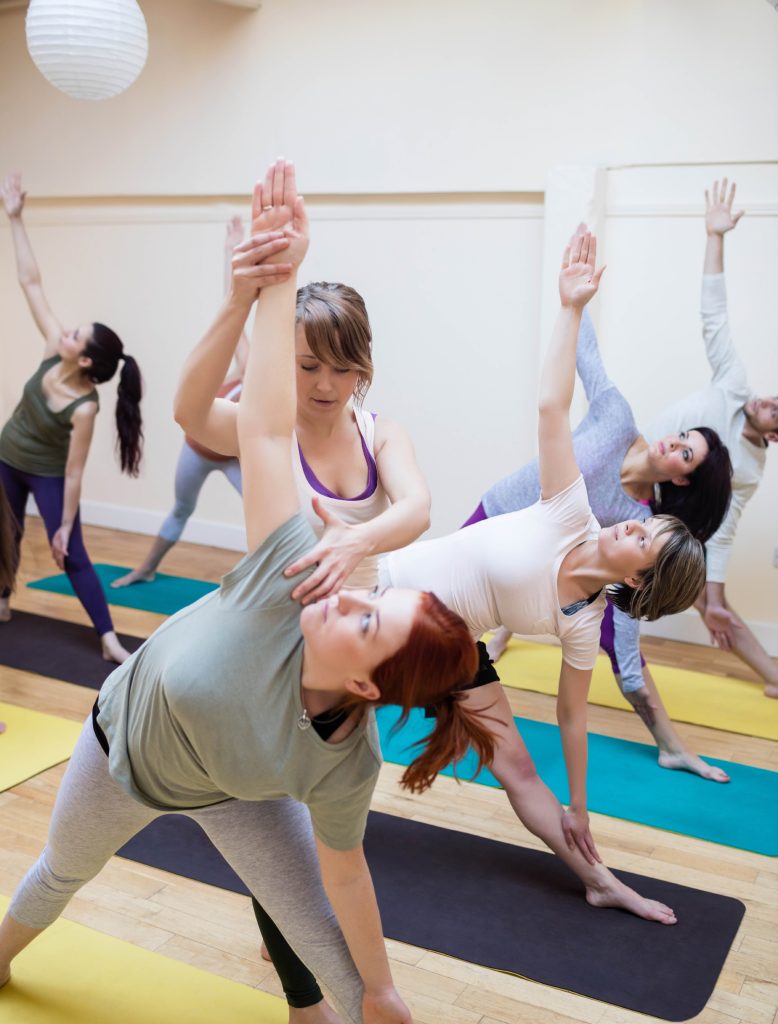
More recently, there is a growing body of yoga practitioners who are exploring how we can use the purpose and principle of yoga to develop communication skills, using movement, breath, co-regulation and joint attention. The foundations of Umbrella Yoga are built on these principles – that through combining breath, movement and sensory awareness we can enhance connections with ourselves, our surroundings, and – crucially – with other people. Over the last 5 years, Umbrella Yoga has worked towards its mission of improving the health and wellbeing of adults with additional mental and physical needs through group yoga sessions. We strengthen community cohesion by creating inclusive yoga sessions that bring together people from diverse ethnic and cultural backgrounds and multiple and varied cognitive and physical needs. Participants are empowered to build their own self-esteem and confidence, enhance social connections, and take ownership of their mental and physical health.

Creating Opportunities to Connect
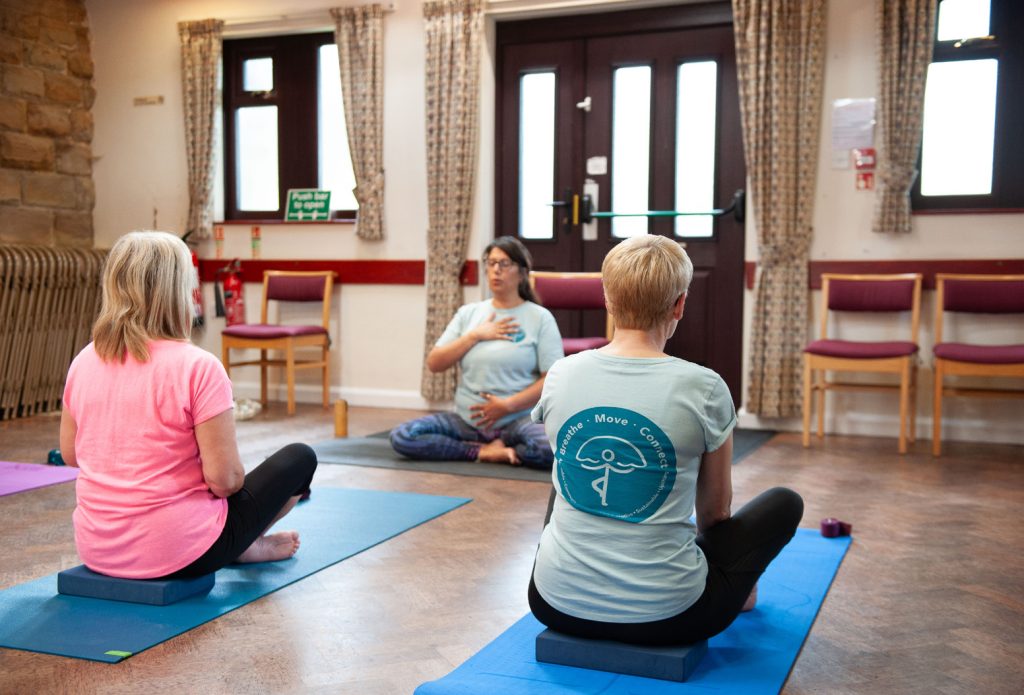
Since 2020, Umbrella Yoga has partnered with over 60 local organisations in Kirklees, with over 4000 adults joining a yoga session. In our partnership sessions, we go into another organisation’s venue and lead accessible, tailored yoga sessions for adults with learning disabilities, dementia, or survivors of trauma. Staff members have the opportunity to join in themselves, and to support the people they are working with to take part. We’ve noticed profound impacts on these people, often deepening the connection with the person they are supporting, and experiencing the added benefit of feeling more relaxed in themselves and ready to face their demanding roles.
We notice that when staff support members in the group to participate – perhaps assisting with movements, or encouraging them to maintain a restful position – the person they support is more likely to explore a position or try a breathing exercise because they trust and feel secure with the member of staff. The sense of achievement, self confidence and connection is of benefit to both.
Through these observations, our yoga teachers have seen how the connections between staff in the partner venues and the yoga participants developed. This got us thinking – what could we do to support that connection, that communication and co-regulation, and enable both parties to benefit from the principles of yoga?
Breathe, Move Connect
Unprecedented rates of burnout for staff are reported across our health and social care systems; the consequence of this can be life-changing. The impact of burnout is felt broadly across our health and social care systems; it is a major contributor in current high levels of staff sickness and has a profound impact on resources that are already stretched. Moreover, it can negatively impact on the care experience received by the people in the care system (Sipos 2024).
When caring for others, it is common to fail to recognise our own warning signs of fatigue until it is too late. Sipos (2024) suggests that by valuing and supporting staff to build resilience, we reduce burnout. Investment in wellbeing and stress management skills can reduce the likelihood of burnout.
Yoga provides a unique opportunity for a person to settle into their own sensory, physical and mental experience, with the implications for improved self-care being significant.
At Umbrella Yoga we know that by learning the skills of how to breath, move and connect will reduce stress, increase self-regulation and create a sense of empowerment for the individual.
By giving people the awareness, skills and confidence to reduce their own stress – without medication or ongoing cost – through learned techniques such as breathing techniques, or a short sequence of movements in class, these skills can be used during times of stress or fit into a short window of time at the end of day.
That’s why we’ve developed a 6-hour, interactive workshop designed to support participants in two key ways:
- Help them look after their own mental and physical wellbeing using simple, yoga inspired breath and movement techniques.
- Equip them to share these tools with adults with additional needs in their care or professional role.
Yoga to create connection
Yoga offers a shared experience that doesn’t require language or any verbal fluency. Whether someone is non verbal, has learning disabilities, or sensory challenges, yoga creates an opportunity to communicate through rhythm,
stillness, and the shared experiences of trust, calm, and playful fun.
By cueing simple breathing patterns, mirroring movements, or sharing much-needed moments of calm, it’s possible to establish trust and mutual understanding. Yoga helps strip away complexity and demand, allowing two or more people to connect through presence, rather than direct verbal instruction.
Perhaps most importantly, yoga invites us all—practitioner and teacher alike— to slow down and listen. To be fully present. In this presence, we begin to notice the unique ways someone might communicate—through eye gaze, gestures, movement, or energy shifts.
Connection is something we feel, sense, and cultivate through shared attention and care.
Yoga provides the conditions for that connection to grow, even in silence.
Tapping Into the Senses
For individuals with additional needs – such as learning disabilities, dementia, or autism – the world can often feel overwhelming.


A common reason, which applied across all these conditions and many more, is that sensory perception and processing are derailed, either due to fundamental sensory impairments, or because of atypical and unusual ways of processing sensory information, or both. Regardless of the source of the problem, the outcome is often heightened stress levels, compromised communication, as well as challenges to interpersonal connections.
What can we do to ease these symptoms? Yoga – when made accessible and adapted appropriately – has enormous potential to build someone’s focus on interoception (sensing internal states), proprioception (body awareness), and breath control offers grounding tools that can help individuals better understand and regulate their responses to the world.
By gently guiding attention inward, we can build an awareness of physical and sensory experiences, fostering a stronger sense of “self in space.” This can support emotional regulation, reduce anxiety, and increase confidence—factors that directly impact how we relate to others.
Creating Safe Spaces
Yoga sessions for people with additional needs aren’t about perfection or posture—they’re about accessibility, safety, and empowerment. When adapted thoughtfully, yoga allows individuals to express themselves without fear of judgement or misunderstanding. Through repetition, rhythm, and predictability, yoga becomes a reassuring framework that supports connection at each participant’s pace.
“IN A WORLD THAT
OFTEN OVERLOOKS
OR UNDERESTIMATES
THOSE WITH ADDITIONAL
NEEDS, YOGA OFFERS
SOMETHING RADICAL:
SPACE, RESPECT, AND
THE QUIET MAGIC OF
BEING SEEN—JUST AS
WE ARE.”
Group classes also offer opportunities for social interaction—sharing mats, mirroring movements, and celebrating small wins together. These subtle shared experiences can create deep bonds that often grow stronger than those built through conversation alone.
Final Thoughts
Yoga is not a cure or a fix. It is a practice—a pathway. For people with additional needs, it can be a gentle invitation into their own bodies,
a bridge to the people around them, and a powerful reminder that connection is possible in many forms. In a world that often overlooks or underestimates those with additional needs, yoga offers something radical: space, respect, and the quiet magic of being seen—just as we are.
New Workshop: Breathe,
Move, Connect.
Umbrella Yoga’s new workshop is called Breathe, Move, Connect: Introducing the Principles of Yoga and is ideal for healthcare professionals, carers and family members looking for accessible, sustainable ways to bring calm and connection into everyday life.
This 6-hour, interactive workshop is designed to support people by helping them to look after their own mental and physical wellbeing using simple, yoga-inspired breath and movement techniques.
It also gives them the skills to share what they have learned with adults who have additional needs they may be caring for in their professional roles. The course is available either online or in-person with various dates starting from October 2025 and the cost is £95.
References
- Blair, J. (2023). Communication challenges for people with learning disabilities in the digital age. Learning Disability Practice. doi: 10.7748/ldp.2023.e220
- Sipos, D., Goyal, R., Zapata, T. (2024) Addressing burnout in the healthcare workforce: current realities and mitigation strategies. The Lancet Regional Health – Europe, Volume 42, 100961
Dr Ellie Firth is the founder of Umbrella Yoga. She specialises in teaching yoga to adults with diverse needs, including autism, Down’s Syndrome, learning disabilities, and dementia. With over 20 years of experience in psychology and mental health research, she creates yoga practices that are both insightful and effective, making yoga accessible to everyone.
Social media handles: https://www.instagram.com/umbrella.yoga.uk/ https://www.facebook.com/umbrella.yoga.uk LinkedIn: https://www.linkedin.com/in/ellie-firth-uycic/ WEBSITE: https://umbrellayoga.co.uk/ healthcare-professionals/
Emma Stripe is a learning disability nurse specialist, researcher and yoga enthusiast. She is passionate about social change and believes in involvement and inclusion for individuals with learning disabilities in all areas of life.
Social media handle: https://www. linkedin.com/in/emma-stripe 7b6816307/