Returning to Balance through Ancient Wisdom


As people from all walks of life are starting to reach out for more nature-based approaches to health and well-being, the ancient Indian healing system known as Ayurveda is becoming popular around the globe.
In its simplest terms, Ayurveda promotes living in balance with your constitution and your circadian rhythms, in order to remain healthy. It is a profound healing and preventative healthcare system that we can tap into through our daily food and lifestyle choices – but it’s not a case of “one size fits all”.

Science now shows that our digestion determines the health of both our body and mind, and no one dietary approach is right for everyone. Ayurveda recognised this more than 5,000 years ago, offering a personalised approach to well-being, which has the health of your digestive system as a founding principle.
Ayurveda is all about self-care. Here, Ayurvedic coach Lucy Fleetwood shares her advice for incorporating the basic principles of Ayurveda into your life for renewed vitality, a strong immune system, and great digestive health.
UNDERSTANDING THE FIVE PRINCIPLES OR ELEMENTS OF AYURVEDA
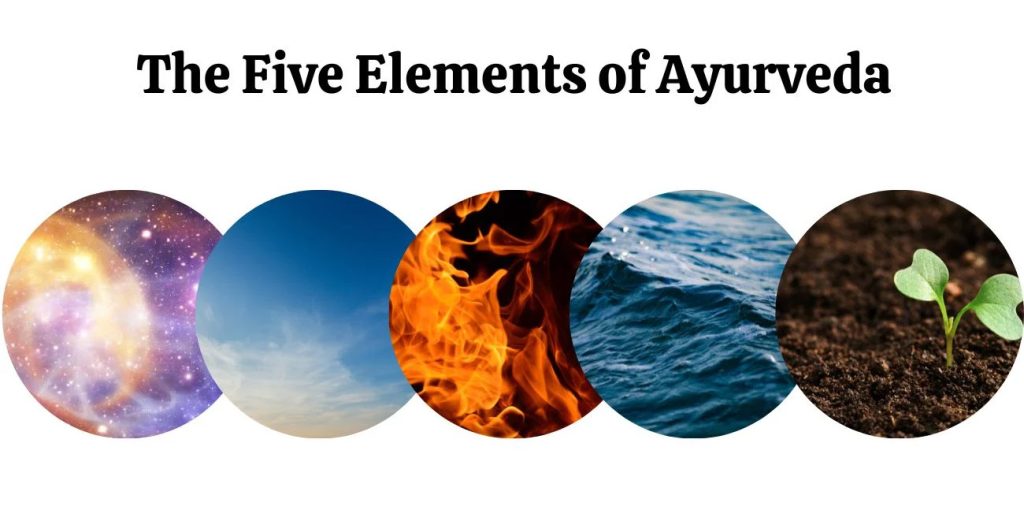
Ayurveda explains that everything in the universe is composed of five elements: prithvi (earth), jala (water), teja (fire), vayu (air) and aakash (ether). These are the five principles. These elements form everything, including us, the food we eat and even the experiences we consume through our senses, by the qualities they bring into existence.
The elements of earth, water, fire, air and ether don’t correspond to the elements on the periodic table; rather, they are terms used to describe how
energy behaves. For example, the earth element is energy behaving like earth, allowing for structure.
When in balance, the elements facilitate specific functions within the body that support good health, through the qualities and principles they bring. It’s when they move out of balance that health problems arise.
Understanding how to recognise when the elements are moving out of balance within us, through symptom recognition, gives us the opportunity to correct any imbalances early and remain healthy.
By working with the elements, and keeping them in balance, it allows us to create the conditions from which well-being naturally flows. This doesn’t mean, though, that we all need the same balance of the elements. Each person is born with a specific ratio of the elements, which they need to keep in equilibrium through their food and lifestyle choices.
SYMPTOMS OF IMBALANCE
There are specific symptoms that show up when any of the elements builds in too large a quantity, as well as specific remedies that can be applied. The quicker a symptom is noticed and the remedy applied, the faster balance is restored, so that the conditions from which well-being naturally flows can return.
Ether element
The ether element allows for space to exist – for example, the space within the digestive tract through which food moves. Too much ether leads to structures within the body deteriorating, as space takes over. In too great a quantity, ether can also lead to symptoms that include feeling spaced-out and ungrounded. If you feel these symptoms, you could consume less of the ether elements through your food and lifestyle choices to correct this.
Air element
The air element is responsible for all movement within the body. The correct balance of the air element


allows for the proper functioning of the nervous system, as well as any processes that involve movement throughout any part of the body. Too much of the air element in the nervous system will cause hyperactivity, nervousness and anxiety, while a lack will cause lethargy. When there is too much air in the intestines, it can cause loose stools, while too little can cause constipation.
Fire element
The fire element brings heat into the body. In balance, it allows the body to metabolise and assimilate not only the food we eat, but also the experiences life brings to us. Too much heat can lead to a temperament that is hot and fiery, while within the body it can lead to inflammation.
Water element
The water element supports nourishment and protection through fluids allowing for the creation of plasma and lymph. Too much of the water element can lead to too much fluid in the body, which can undermine the body’s functions in that area. For example, too much water in the stomach weakens digestion.
Earth element
The earth element allows for structure and stability. When there is too much, we can become lethargic, or put on weight that is hard to lose. Too little of the earth element, however, can lead to a lack of structure and stability, both physically and psychologically. This results in too little body weight and psychological ungroundedness.
ATTRIBUTES OF THE DOSHAS
In Ayurveda, our constitution is underpinned by the elements. Ayurveda refers to the elements in our constitution as the doshas. There are three dosha types – vata, pitta and kapha. We all have varying amounts of the doshas in our constitution, which accounts for our different physical and mental characteristics.
Vata
Vata dosha is formed from the elements of ether and air. It brings qualities of dry, clear, cold, light, movement, rough and subtle. These elements bring dynamic qualities. If you have a vata-dominant constitution,
this dynamism will give you a love of
new ideas.
Pitta
Pitta dosha is formed from the elements of fire and water. It brings qualities of heat, light, liquid, movement, oiliness and penetrating. These elements allow for digestion, metabolism and transformation. If you have a pitta-predominant constitution and are in balance, you will have good digestion, while the penetrating quality will give you good mental focus.
Kapha
Kapha dosha is formed from the elements of earth and water. It brings qualities of cold, cloudy, dense, heavy, oily, slimy, slow, soft and static. These elements allow for the functions of structure and lubrication. This is why kapha types have a bigger build compared to vata and pitta types, and a nature that is steady and loving.
Each person is born with a unique ratio of the elements, and health begins when we live in harmony with our own nature.




triangle pose, warrior poses, standing forward bends, headstand, cobra, tortoise pose, boat pose, child’s pose, supine spinal twist and corpse pose. Sun salutation carried out first thing is a good option for all dosha types, as it’s warming and energises the body. Dr David Frawley explains in his book, Yoga for Your Type (Lotus Press, 2001), that this routine is good for improving digestion, balancing all doshas, increasing circulation, strengthening and stretching the body, and promoting vitality.
YOGA
Ayurveda and yoga both come from the ancient Indian system of vedic knowledge and go hand in hand. When yoga first came to the West, Ayurveda got a little left behind. There has been a tendency in the West for yoga to be viewed simply as an exercise routine, rather than the life-enhancing Ayurvedic therapy and spiritual pathway that it is. While the practice of yoga improves flexibility, posture, vitality and immunity, as well as relieving tension, it can also bring balance to each of the doshas and purify the consciousness, which brings peace to the mind.
YOGA TO BALANCE VATA DOSHA
To balance vata dosha, you need to practise asanas that support the colon, sacrum, pelvis, hips and spine. Your practice needs to be steady, slow and calm. Vata types need strengthening and grounding, and so any yoga routine for vata balance should bring stability and a contemplative element. At the end of your practice, you should feel grounded, calm and warm. Some asanas that support vata dosha include tree pose, mountain pose,
YOGA TO BALANCE
PITTA DOSHA
Pitta dosha, and those with a pitta imbalance, need a routine that is relaxing, calming, cooling, surrendering, forgiving and gentle. If you are a pitta type or have a pitta imbalance, include a cooling down routine at the end of your practice session. Some calming asanas to incorporate into the end of your routine include standing forward fold, child’s pose, seated side bend and seated forward pose, finishing with corpse pose.
Pitta types need to focus on asanas that support the middle of the abdomen,
The tree of yoga has eight limbs: yama (ethics), niyama (self-discipline), asana (yogic postures), pranayama (breath control), pratyahara (sensory control), dharana (concentration), dhyana (meditation) and samadhi (transcending the self)
The following self-care practices take a look at asanas for each dosha type, breath control, sensory control and meditation. These practices can transform your physical health and mental outlook, and form a foundation from which you can build a preventative Ayurvedic healthcare plan.


the small intestine and liver. Other asanas that are good for pitta types include easy pose, wide angle sitting forward bend, head to knee pose, butterfly pose, tree pose, triangle pose, wide legged standing forward bend, shoulder stand, boat pose, cobra pose, bow pose and corpse pose. Moon salutation is also good for calming pitta dosha. This is the perfect practice to include in your bedtime routine to unwind, because it calms the nervous system and prepares the body for a deeper, more restorative sleep.
YOGA TO BALANCE
KAPHA DOSHA
Kapha dosha types, and those with an imbalance of kapha dosha, need a routine that is challenging, stimulating, warming, invigorating, releasing and lightening. If this is you, focus
on vinyasa style yoga, include lots of jumps between your poses, but also ensure you hold some of your poses for a good length of time, for endurance.
Choose asanas that will open the stomach and chest. You could include lion pose, locust, bow, camel, handstand, headstand, shoulder stand, downward dog and alligator twist. Sun salutation is very good for kapha types to carry out first thing each morning, to reset their circadian rhythm, wake up their metabolism and bring warmth into their system. To achieve this, carry out sun salutation at a vigorous, energising pace.
At their end of your practice, settle in corpse pose for just a short period of time, as kapha types need to keep the higher energy achieved through their practice flowing.
Lucy Fleetwood brings together Ayurveda with Yoga Nidra and solution focused coaching in her Back to Balance Programme, to support people with Ayurvedic health plans and to manage stress. She works both privately, and offers coaching surgeries within the corporate world. You can find out more at lucyfleetwood.com
Her book, ‘The Little Book of Ayurveda’ is published by Summersdale Publishers, £7.99



Words: Lucy Fleetwood