REGGIE HUBBARD ON YOGA, ACTIVISM, AND THE POWER OF INNER PEACE
1. Your yoga journey began as a response to extreme professional adversity. Can you walk us through that experience and how it shaped your understanding of the practice?
I was up for two appointments in the Obama Administration. I called in all favors into the in hopes to gain either of these jobs – certain that I would be chosen into one of them. As fate would have it, I made it to the top two for both and was chosen for neither. In response to such a momentous professional letdown, I resolved to only do things that lowered my blood pressure, were very artsy and creative and/or something I have never done before. One day a dear friend invited me to attend an asana and I said yes. I heard yoga lowered blood pressure, was sure it was creative and had definitely never practiced before. I became a fixture at a small studio named Yoga Noma, which nurtured my ability to move beyond the professional heartbreak and disappointment – seizing the blessing of what is often perceives as missed opportunity.
I started working for an international education nonprofit in Denver in January 2015. I thought it was a dream, but it quickly became a nightmare. One staff meeting, the founder of the nonprofit looked me in my eyes with alligator tears saying, “We don’t know why we hired you. You’re a waste of headcount and payroll. I felt anger, sadness and betrayal arise within me. I wanted to scream at this disrespect, but knew that would be an expensive and career limiting decision.
I had to proactively manage this unforeseen setback, so I went Kindness Yoga because I sensed that spending more time practicing yoga would be a lifeline in my predicament. I started practicing asana at sunrise and sunset, because the job was that terrible. I did not know that I was practicing sadhana. Consistent physical practice combined with a philosophical disposition allowed me to harness adversity as fuel for healing and liberation. This rigorous, devotional practice allowed me to endure the terrible ten month tenure of the job and set the foundation for my life going forward. Yogic and meditative practice are foundational to my life. This beautiful ancient wisdom tradition has helped release attachment to old pain and process moments in real time from a place of peace, service, and discernment rather than a reactivity.

2. How would you describe your personal philosophy of yoga and how does it go beyond the mat into everyday life?
Yoga is the alignment of mind, body and spirit in service to deepening relationship with your true Self and higher consciousness to create conditions for healing for yourself and all beings through your lived experience, actions, words and being.
It goes beyond the mat in many ways. It is a more holistic viewpoint than solely being tethered to the physical practice.
It is both internally and externally focused. I am not accruing all physical, spiritual and mental benefits solely for my self. It is the basis of my service to others. It is a synthesis of bhakti (devotion) and karma (yoga of service and action) yoga fused with an eye toward creating conditions for the thriving and success of all beings. It is not a political statement, but a spiritual invitation.

3. You’ve studied with a wide range of influential teachers. Which lessons or principles from those experiences have most profoundly shaped your teaching approach?
- A commitment to authenticity, creativity, service and integrity. In an environment where there were/are very few people like me in many ways, having unshakeable faith in my own voice and experience and creativity is essential. My title is Chief Serving Officer.
- I’ve grown in my connection to the depth and breadth of yogic practice, – embodying a yes/and approach – seeing the whole of life as a means of experiencing and expressing the miracle of existence and expanding our connection to infinite consciousness.
- I’ve learned to see through the myth of separation and merged yogic practice and social action as the ultimate expression of healing liberation.
- I’ve learned to approach seemingly intractable problems with curiosity and kindness as opposed to anger and critique.

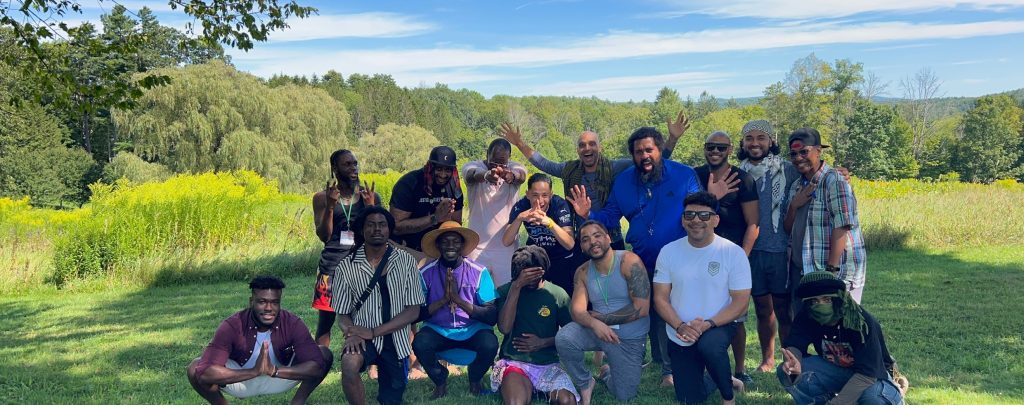
4. What inspired you to found Active Peace Yoga, and how does its mission reflect your deeper beliefs about who yoga is for?
The active peace community is multi identity, multiracial, intergenerational focused on keeping our heart open and mind clear so that we can take wise action supportive of individual and collective liberation.
Active Peace launched on April 2, 2020 – three weeks into the pandemic with a desire to help people find a place to process some very hard news we were experiencing individually and collectively. Things only got more clear with the murder of George Floyd in broad daylight by the police. I noticed an alarming lack of diversity in yoga spaces with no one t giving real guidance on the imperative to act and be for justice as opposed to for comfort. I vowed to speak for those who could not speak – either through societal oppression or attempted erasure or whatever. And I haven’t stopped talking since.
From there, the teaching practice has evolved in two directions:
- One, to be a refuge for weary activists seeking to cause transformational reform in chaotic times. Many activists run themselves into the ground as a badge of honor as opposed to adopting sustainable habits and treating activism with a longer view.
- Secondly, I wanted to be a resource for those in the yoga community that wanted to do something but had no one to give them encouragement direction or food for thought.
5. You speak openly about making yoga more accessible and inclusive. What are some of the exclusionary patterns you’ve witnessed in the wellness world, and how are you working to shift them?
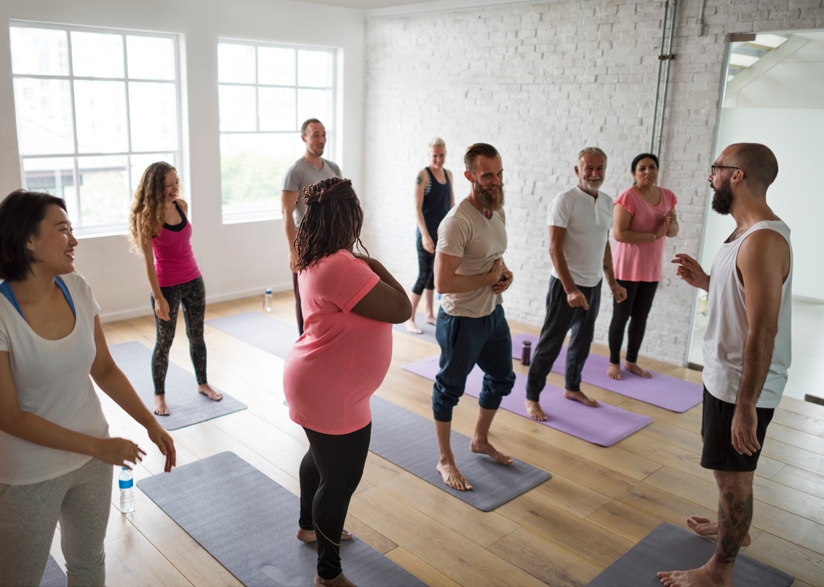
Many yoga spaces haven’t had honest reckonings about racism and classism – I seek to shift that by having hard conversations and practices devoted to the normalization of social justice and yogic practice as a means of creating conditions for mutual thriving.
There are economic barriers to entry – I offer donation based practices rooted in the principle of generosity, or sliding scale pricing on courses/ workshops with scholarship options.
There can be cliquish behaviors and a mythology/culture about what a Yogi is and does that often has nothing to do with embodied wisdom but more about social etiquette and physical ability – I am authentically myself and in so doing hope to inspire others who yearn to be in authentic community or learn more about how to do so.
Certain yoga festivals have no mechanism of welcoming new talent, diverse talent and seem to have no interest in seeking to do so – I’ve worked in partnership with the Sedona Yoga Festival since 2022 to open up opportunities for LGBTQIA+ teachers, BIPOC teachers, lesser knowns AND to cultivate a diverse group of attendees.
As a someone in a bigger body, certain sequencing and flows just aren’t for every body – I often do freestyle practices where I offer open cues for a body region or energy we are seeking to cultivate, giving people permission to express their practice in accordance with their needs.
To help steward the forward evolution of practice communities – I am in active partnership with Kripalu to create programming that serves a broader community (Permission and Refuge – Healing Retreat for Men of Color @ Kripalu (recently featured in Essence magazine – a merger of wellness and popculture).
6. As a Black male teacher in a predominantly white wellness space, what unique perspectives or healing do you feel you bring to your students?
I think the experience of overcoming tremendous adversity, racism and other exclusion while maintaining equanimity in very challenging circumstances gives me an opportunity to share stories and perspectives that aren’t common.
I had a career as a political operative and marketing director before yoga/ meditation so I can offer anecdotes from my former days to show contrast from then to now (e.g., drinking bourbon and smoking cigarettes for breakfast).
Speaking about my health, mortality and both the good and terrible decisions I made about my health is uncommon. That vulnerability is a teaching tool for all walks of life.
The candor and confidence with which I offer my teaching is in direct contrast to the forced politeness not just in yoga spaces but in broader society.
7. How has your yoga and meditation practice supported your recovery from a stroke, and what did that chapter teach you about resilience and surrender?
Having a stroke has been an invitation into deeper discipline, embodied wisdom, higher love and service. Very early in my recovery I vowed to welcome stroke as Teacher, my thoughts rooted in the frame, “How is this happening for me”, not “Why is this happening to me?” To be rooted in this paradigm from the inception of my recovery has been the most profound and deepest yogic/meditative practice of my life thus far.
Stroke as a Teacher, taught me that rest and vulnerability are the fuel that feed resilience. And resilience is the combination of grit and grace – raw determination to try from a place of curiosity rather than criticism.
In terms of surrender, I feel completely tethered to the miraculous. I celebrate small victories, knowing how far I have come. I never losing sight of the possibility of miracles when surrounded by seemingly impossible circumstances. Functioning anatomy and robust neurology – is a miracle. The ability to be aware enough to fill out this questionnaire – is a miracle. Surrender connects one more viscerally to the mysteries of the universe, trusting that things will work out as they should – doing the best you can and then offering the results to this faith.

8. In your classes, you emphasize “radical presence, honesty, and compassion.” What does that look like in real-time during a session?
Radical presence honesty and compassion can look like me telling the entire truth about my journey with stroke and recovery – bad decisions prior to the event and the process of building back with grit, grace and love.
I once taught a grief sangha days into immense heartbreak at the passing of a cherished family member. I did not want to teach, but did anyway. 100 people came from all over the world. We held pictures and shared stories of departed loved ones in community. I learned obedience to vulnerability, even in the midst of brokenheartedness, was medicine to those whose grief and pain were unseen and unwelcomed in cultures addicted to good vibes only.
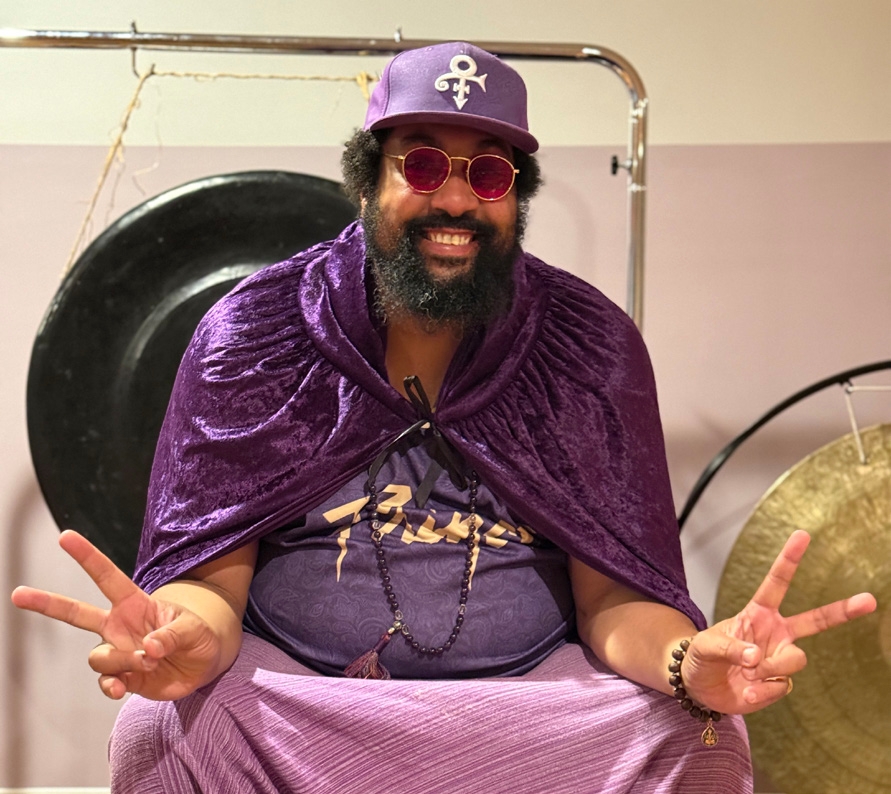
During Prince Season, we listen to Prince songs and through asana, dance and song express radically honesty about what the body needs and have the compassion for self to do what you need to do for yourself, no matter what others are doing.
9. If someone has never practiced yoga and feels unsure where to begin, what would you say to them? What do you most hope they walk away with after a class with you?
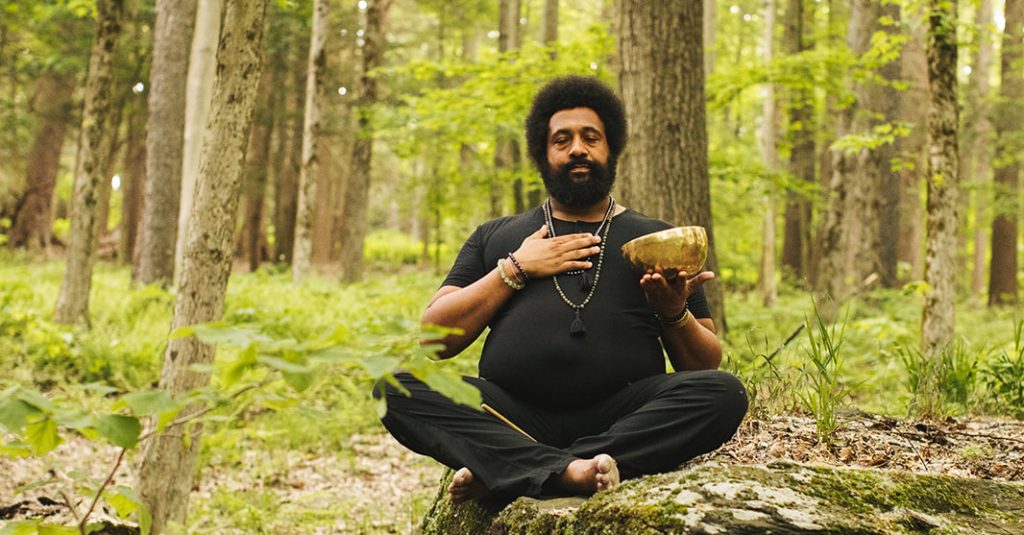
The promise of yoga is to still the fluctuations of the mind. Begin with the thing that most connects to your breath, groundedness and something larger than yourself. Repeat this to build spiritual and energetic muscle memory of embodied peace.
Whatever movements for whatever duration of time that give you a chance to reset your mind, take a deep breath and be closer to the present moment – that is yoga. It doesn’t have to be a set time and place, if you don’t have the time or disposable income. Walking in the park. Listening to the breeze and birdsong. Two minutes of hand stretching and gentle twists between Zoom calls. My hope is that people take away a sense of connection to something beautiful, magical and attainable. I hope they have tools and inspiration upon which to build a practice that grows with them over time.
10. You often describe your work as bridging the gap between spiritual practice and systemic change. How do you navigate the tension between inner stillness and the urgency of activism?
Many activists tend to view things as a fight or struggle. But what if activism were viewed through the lens as the dance of creation? Rather than inviting people to a fight, inviting them to do something regenerative, communal, creative and fun. This informs how I approach activism, teaching, music or anything that I do.
Yes, there is an urgency to activism – but how much of that urgency is rooted in anxiety and a sense of wanting/needing to maintain control? Yoga has taught me deep surrender, so everything I do is an offering to the Supreme. Inner stillness gives rise to discernment, which allows for greater stewardship of resources and creativity. Amplified urgency can have the opposite effect to what the activist seeks – cloudy judgement, poor decisions, a sense of despair. Inner stillness can hold despair, urgency, hope and love at the same time – and do the work needed for healing and transformation.
I personally navigate this tension by seeing it for the false choice that it is. Inner stillness tells me that healing my wounds is essential for helping others heal. Inner stillness tells me that approaching a dark times with a light heart and clear mind may yield a breakthrough. Inner stillness tells me that the impatience that is often born of urgency can be tempered with an awareness that I am required to do the good in front of me, and inspire others to do the same.