


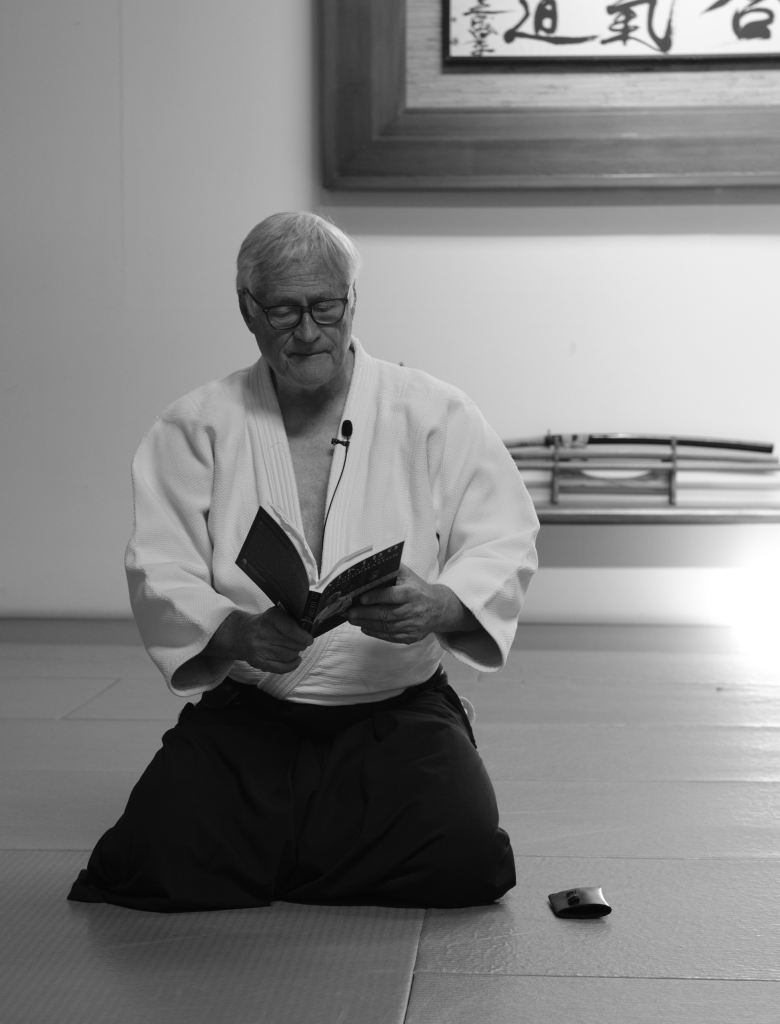
In this insightful Q&A, we speak with Bob Noha, 6th dan Aikido instructor and co-author of Aikido: The Art of Transformation – The Life and Teachings of Robert Nadeau. A direct student of Aikido founder Morihei Ueshiba, Nadeau played a pivotal role in bringing Aikido to the West. This interview explores Nadeau’s unique teachings on universal energy, inner transformation, and energy refinement—principles that extend far beyond the martial arts mat. Through Bob Noha’s perspective, we gain rare insights into how these teachings can enrich daily life, support personal growth, and inspire spiritual awareness, regardless of one’s Aikido background.
What were Mr. Nadeau’s experiences training with the Founder of Aikido?
Nadeau Sensei had a unique experience training with the founder because he practiced Judo, body building, meditation and Yoga starting in high school, well before he traveled to Japan and met Morihei Ueshiba Osensei, the Founder of Aikido. When he began practicing in the early 1950s in Redwood City, California, near San Francisco, these practices were not well known with few students and even fewer teachers.
One of Nadeau’s early teachers was Walt Baptiste (1917-2001) who pioneered combining Yoga, body building and meditation practices, and who had himself studied meditation with his uncle, a student of Parmahansa Yogananda.
The teenage Nadeau found that when he practiced Yoga his Judo performance improved considerably. This harmony between mind and body is well known today but not nearly so much in the early 1950s.
The young Nadeau was inspired by his early experiences of inner practices to
pursue a deeper understanding of how mind and body — matter and spirit — interacted and how this relationship could be embodied in a practical manner.
When he arrived in Japan in the early 1960s, he saw in Morihei Ueshiba, the founder of Aikido, a great teacher who had mastered this relationship between mind, body and spirit in a highly evolved state of being that made him an extraordinary martial artist and powerfully energetic personal presence.
The result was the development of a close relationship between Nadeau and Ueshiba in which the founder shared his deepest teachings, going far beyond martial effectiveness. He helped Nadeau experience, in a very direct way, the deepest dimensions of consciousness and how these could be embodied in a functional way.
How are his teachings applicable to readers who don’t practice Aikido?
The founder expressed himself using ancient Shinto vocabulary, concepts and stories. His physical demonstrations were breathtaking, but the ancient teachings were difficult to follow for many of his Japanese students, and even more so for non-Japanese students.
One of Nadeau Sensei’s most valuable contributions has been to rephrase and reframe Ueshiba’s teachings in a way that can be more easily understood and experienced by Western students. For many years he taught “Energy Workshops” open to Aikido students and non-students alike. Nadeau recognized the inner teachings could apply to daily life and benefit people working in diverse areas such as sport, business, psychology, legal practice, performing arts and medicine.
Our new book Aikido: The Art of Transformation contains 82 accounts by students of Nadeau Sensei about how his teachings enriched their lives, few of which are about the martial art of Aikido itself. These personal stories provide many examples of how the teachings apply to significant daily life challenges outside formal Aikido practice.
How do you explain the principle of universal energy?
Universal energy is the underlying substance of which all dimensions of consciousness are formed. It is the manifestation of spirit. Universal energy can be experienced differently at different levels of consciousness based on the person’s level of understanding. Some of Nadeau Sensei’s most valuable teachings layout a map of universal consciousness and how to navigate situations we may face in life while functioning better at both the physical and energetic levels of consciousness.
How has Mr. Nadeau’s teaching positively impacted your life?
I have been practicing Aikido with Nadeau Sensei since I was 16 years old, so his teachings have influenced me over my entire life. Personally, they have helped me to navigate several major life decisions. One example is when I had to decide whether to move to another city and take a new job or remain where I was in my current job. Nadeau Sensei advised me to visualize each situation as a tree and see which one grew more fully and completely. The practice clearly pointed me to selecting a new job, which worked much better than I could have hoped for.
Can you provide examples of how the teachings have been applied to areas outside of Aikido practice itself? Nadeau Sensei began teaching in the Northern California area in the mid-1960s when the Human Potential Movement was just beginning. He became involved with the Esalen Institute, in Big Sur California, which provided him the opportunity to convey the teachings of Aikido to a broad spectrum of people who did not practice martial arts. His time at Esalen also enabled fertile cross-pollination between Nadeau and the many other influential instructors who were also there, such as Alan Watts, John Lilly, Jack Kornfeld, Fritz Perls, Gregory Bateson, Joseph Cambell, Aldous Huxley, Moshe Feldenkrais and Ida Rolf.
Several of Nadeau Sensei’s students wrote books, some of which became best sellers, such as The Ultimate Athlete by George Leonard, Way of the Peaceful Warrior by Dan Milman, and Golf in the Kingdom by Michael Murphy which has sold over a million copies, been translated into 19 languages, and made into a movie.
One example of how Nadeau Sensei’s teachings have been applied outside of Aikido practice is presented in our book by a former student, an attorney, who adapted his Aikido experiences to establish a successful legal mediation practice that has resolved more than 4000 legal disputes over 43 years using the principles of harmony and conflict resolution he learned from Nadeau Sensei.
How have his teachings evolved over time?
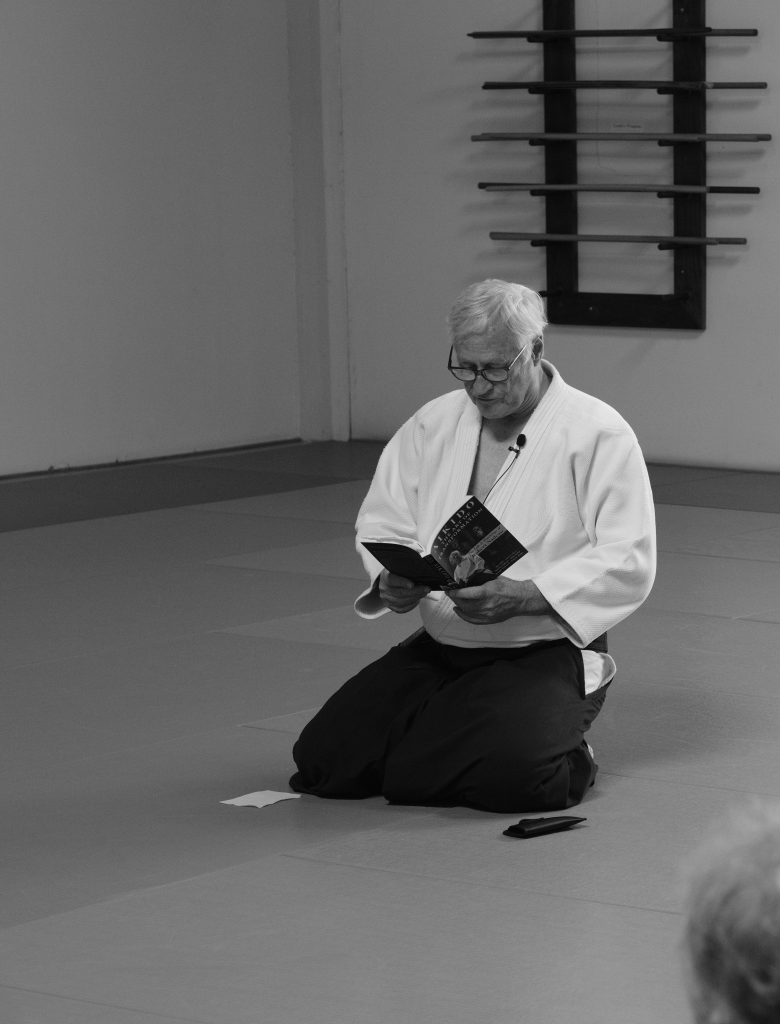
While the principles Nadeau Sensei teaches have remained remarkably constant over his more than 60-year career, the way he expresses them has evolved. His articulation of the teachings has become clearer and the exercises he designs to allow students to experience them have become more accessible for both Aikido students and non-students. He has increasingly focused on teaching that awareness without an experiential grounding does not yield long- term sustainable results.
How do his teachings go beyond the physical techniques of Aikido?
Nadeau Sensei teaches both Aikido and energy awareness from the inside out. He focuses on the inner experience and not just on outer performance or the mental awareness of concepts.
Unlike most Aikido teachers, Nadeau Sensei often asks students what they are feeling during classes. Nadeau Sensei uses these interactions to help the students focus on their inner experience of posture, attitude, poise and energy flows as crucial elements in effective practice.
How has Mr. Nadeau contributed to the growth and development of Aikido?
Through his decades of teaching in all parts of the UnitedStates, Europe, Israel and New Zealand, Nadeau Sensei has shared his approach to Aikido with many thousands of students and teachers.
He was the founder of several dojo (schools) in Northern California where he personally taught formany years. And he was one of the co-founders of the California Aikido Association which has grown to include member schools from all over the world.
He has trained many Aikido teachers who have gone on to establish their own schools and share his unique approach to Aikido.

What is unique about Robert Nadeau’s life and teachings?
Nadeau Sensei has developed an idiosyncratic approach that integrates Eastern wisdom and Western psychology thanks to his lifelong quest for mind/body harmony and deeper understanding of the human potential. He has constantly adapted to changing times and circumstances, allowing him to meet the needs of students wherever they are over many decades.
One example is when the COVID pandemic hit in 2020. With the help of his students, he began a Friday night zoom class with participants from all over the world. This required him to experiment with a new approach to teaching because the traditional environment where teacher and students are physically present with each other and the teacher can observe students practicing with each other was impossible given the pandemic. The Zoom class has been very successful and has continued to this day, every first and third Friday of the month.
How does Nadeau Sensei’s teachings relate to yogic philosophy or practice?
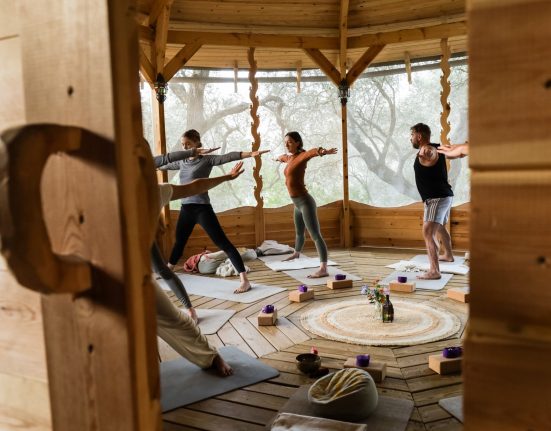
Yoga and Aikido share similar views on spiritual practice even though the outward forms are different. They both integrate mind and body and subtle energies (prana and ki) in their practices. They also share a common emphasis on peace and non-violence — ahimsa.
Aikido techniques also share much in common with Yoga asanas in that they both use physical forms to enable subtle energy flows for better health and personal development.
Both encourage regular practice as a way of life. Both are designed to enable a direct experience of mind/body integration, and in the process promote greater harmony within oneself, within human society, and between people and the creative energies of the larger universe.
Thank you for this opportunity to discuss the teachings we present in the book: Aikido: The Art of Transformation the Life and Teachings of Robert Nadeau. (For more information about the book, please visit www.nadeaushihan.com).
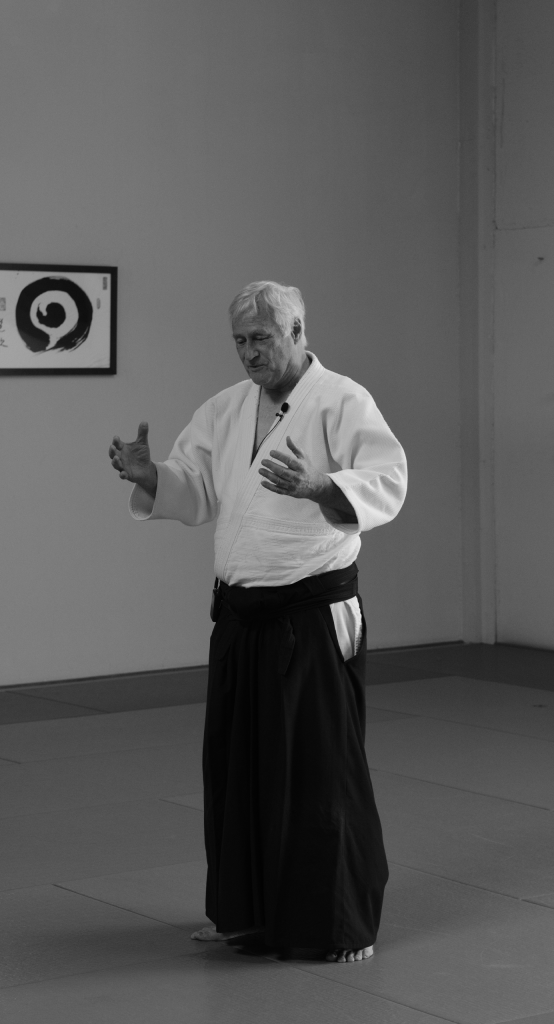
Photos: Alexander Kolbasov


Leave feedback about this