

JONATHANSATTIN ON COMMUNITY, CONNECTION ANDREIMAGINING WELLNESS
As the founder of triyoga, JONATHAN SATTIN has been a central figure in shaping the UK’s yoga and wellness landscape for over two decades. In 2022, he stepped away from the company he built — only to return to his roots in Primrose Hill with a new vision. HOME, his latest venture, is more than a studio; it’s a space designed to nurture connection, belonging, and authenticity in an age of digital distraction. In this conversation with YOGA Magazine, Jonathan reflects on his personal journey, the evolution of yoga and wellbeing, and what it truly means to create a place that feels like home.
☞Starting at the beginning, what brought you to yoga in the first place?
In 1985, I somehow found myself as the senior partner in my own West End law firm – not something I’d ever dreamed of becoming. My days were fuelled by fourteen mugs of coffee (each with two sugars), 40 cigarettes, and a few other things on the side. At the same time, I was playing football, tennis, running, meditating, trying in my own way to find some kind of balance.
A partner at the firm suggested I try yoga. His wife had found a teacher, and he thought it might suit me, given I’d always been a bit “left of centre” because I meditated. I remember going to a flat in Parliament Hill for this one on-one class and at some point, I was lying on the floor with my eyes closed yet seeing a wall of mirrors in my mind – I was running not wanting to look at myself in the mirror. That moment in that class was the catalyst to a series of changes, some quick and some slow.
The teacher introduced me to John Stirk, who became my first asana teacher. Within weeks I had quit the coffee and cigarettes. And over a period of time, I noticed other changes in how I worked, in how I lived. And then somehow, I found myself in an ashram in India where I met my teacher who opened my eyes to the wider practices of yoga. It took some time to step away from my then career, but in 1996 I jumped ship and left law. I helped a friend in his early years of setting up Yo! Sushi, dabbled in a few other ventures, but it was a friend in LA who said, “Why don’t you just do what you love?” And that’s when triyoga was born.
☞ After founding triyoga in 2000 you are seen as one of the visionaries of the wellness and yoga movement, shaping the UK’s wellbeing scene for over two decades, what inspired you to start again with HOME?
I left triyoga in 2022 after more than two decades. I wasn’t planning on opening another centre – I thought that chapter of my life was done. But after taking some form of break, I kept hearing the same thing from people – how so many of us feel disconnected even in a world that seemed more digitally connected than ever. My sense is people want somewhere where they belong, are seen and looked after. That stuck with me.
And then, by some quirk of fate, I found myself back in Primrose Hill – at the original site of triyoga, which had been developed when triyoga moved to Camden in 2014. Wandering into the courtyard and seeing that most of the buildings were vacant was strange, almost surreal. It stirred something in me and the possibility of opening again was probably a sort of musing rather than a reality. But the idea and name for HOME was planted there. HOME isn’t ‘just another studio’. For me, it’s a place to (re)build a community, a reimagining of what I’ve learned, a place to give back and serve. A space for people to reconnect – with practice, with others, with themselves. We opened our doors on June 29th 2025, and the response has been deeply affirming.
☞ How have your goals / drive changed since opening your first studio in 2000 and now with HOME?
I don’t think my drive or goals have fundamentally changed — they’ve just been refined along the way.
I’ve learned about the importance of giving people more in value than what they pay for, and I’ve developed a deeper desire, enjoyment and appreciation for service.
Launching HOME wasn’t part of a master plan; it grew slowly, organically. To return here with a fresh perspective, and to create something more intentional, feels like a privilege.
☞ What makes HOME different?
That’s hard to say, as I’m sure everyone starts with great intentions to look after people. Our mission for HOME has been to create a space that genuinely feels like home – where people feel welcomed, grounded and connected. A space where people can experience the highest quality teaching and service in all its meanings.
I could list the classes or treatments available; our two yoga studios, Reformer Pilates studio, Equipment Pilates, two treatment rooms, infrared sauna, and plant-forward vegetarian food from Only Love Kitchen. But what makes HOME different is our intention…
The feeling you get when you walk in. The warmth of the welcome, the sense that every detail has been thought through – from the reclaimed 150-year-old Douglas fir flooring under your feet, to the café table
salvaged from a school chemistry lab.
Above all, HOME is a place for people
to feel cared for and connected.
☞ The name HOME is simple yet evocative. What does “home” mean to you — both personally and within the context of this new space?
Primrose Hill holds deep meaning for me, both personally and professionally. It’s where I lived for many years, it’s where triyoga began, where I first felt what it meant to build something from the ground up in service of community and wellbeing. So coming back here has, in many ways, felt like – forgive the pun – coming home.
The name itself came intuitively. HOME speaks to something universal, yet also deeply personal – it means something different to everyone.
For me, it represents belonging. In a time when so many feel disconnected, when our original sense of “home” can feel lost, perhaps this space can help to restore some of that.
☞ You’ve brought together some of the most respected teachers and therapist in the UK — What do you look for in a teacher?
That’s quite a long list… Experience and knowledge of their style of teaching of course. A commitment to their own learning and a desire to serve – it’s the student’s class not theirs.
Every member of our HOME yoga teaching family has been carefully selected for their skill, training and experience – they are highly recommended by their peers and are widely recognised as leaders in their chosen style of yoga.
☞ Tell us about the space itself — it’s the original triyoga building in Primrose Hill. How have you reimagined it for HOME?
There’s something special about this place – the courtyard, the buildings, the energy – that lends itself to presence and connection.
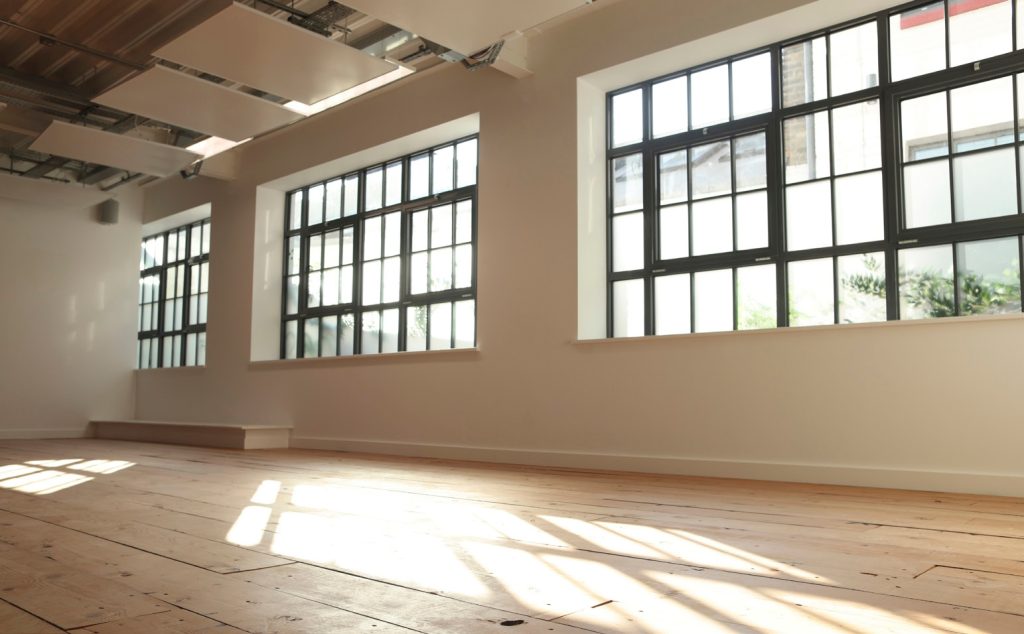
I’d like to think we’ve created a warm, intentional space where every detail has been thought through – not just what we offer, but how it makes people feel. From the yoga and Pilates studios to the treatment rooms and sauna, every space has been designed to feel welcoming and calm. Small details matter – the reclaimed Douglas fir floors, the chemistry lab table in the café, the light and flow of each room.
But beyond the physical, it’s the people that make the space. Our team of teachers and therapists are not only the best in their fields, but they share our values of community and care. We didn’t want to create a place where people felt they had to just come to “do” a class and leave – we wanted to create a place where people feel at home and a part of something. Where if they want to, they can hang around, have a coffee, sit with a book, chat with others – a place to belong.
☞ You’ve said practising yoga changed your life — how has your personal practice evolved over the years?
My practice started as meditation when I was about 19, and asana as in Iyengar yoga. Over the years it’s expanded to incorporate seva (selfless service), chanting and self-enquiry. Like I’m sure with everyone, it has its ups and downs, but I keep going.
☞ How do you think yoga & well being has changed in recent years and what are your hopes for the yoga and wellness and yoga industry?
I think people are more aware than ever of the need for true wellbeing – physical, mental and emotional. Yet, at the same time we are flooded with so many different options, which make it difficult to know what’s real, what’s not.
COVID shifted things too. It drove us apart physically. It expanded access to classes online, which was a gift for many, but it came at the cost of physical connection. Platforms like ClassPass can be both a benefit and a distraction. My hope is that the industry continues to focus on authenticity, integrity, and connection — creating spaces where people genuinely feel supported.
☞ Looking ahead, what’s your hope for everyone who walks through the doors of HOME?
For HOME, the hope is that everyone who comes here feels genuinely welcomed and looked after — that they feel at home. Where if they want to, they can hang out and be in other people’s company or just come practise and go.
If someone walks out of HOME feeling a little more whole, a little more themselves, we’ve done what we set out to do.


Leave feedback about this