
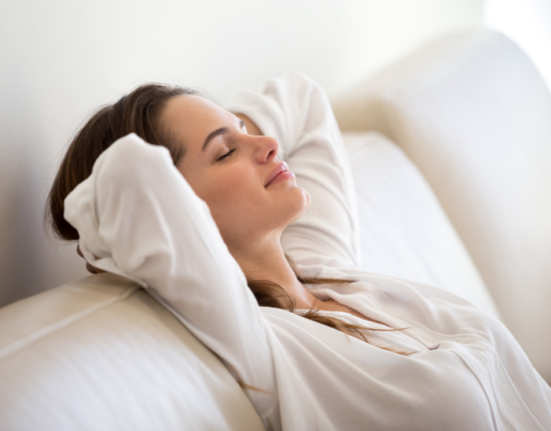

DISCOVER HOW TO MAKE YOGA AT HOME WORK FOR YOU
Words: Tori Lang, BWY Teacher Trainer
Are you keen to get a personal yoga practice going? Perhaps you’ve felt the benefits of yoga in class and want more of it in your life but aren’t sure where to start at home. Or maybe you already do some personal practice but want something a bit more structured?
After 30 years of practising yoga and 20 years of teaching, I’ve seen many students struggle with this exact question. As a course tutor for British Wheel of Yoga (BWY), I’ve supported students to develop and deepen their practice, and I’ve noticed similar patterns emerging. The good news? I’ve got some tried-and-tested tips for how to get started and progress in your practice.
CONSISTENCY IS KEY
It’s better to practice for even a short time every day than for longer just once a week, so the first thing to establish is consistency. Think about when you can best commit to a regular practice during your day. If your work or study doesn’t permit the same time every day, think about the structure of your day – yoga as part of your getting up or going to bed routine, or on your lunch break. Start small, keep it manageable, and you’re more likely to keep that consistency.
1. Start the habit?
Set a daily alarm – stop and get on the mat. Be on the mat for one minute every day for at least a week. There is no ‘practice’ other than being on the mat every day. Sit, stand or lie down, for a minimum of one minute. If you happen to stay longer, that’s a bonus, not an expectation.
2. Consolidate and begin to extend the habit
As before, but now aim for two to five minutes. You may choose to add in awareness of breath or connection with the ground.
3. Make it welcoming to be on your mat and start to move more
- Prepare – clear the space and put your mat out the night before, if possible.
- Establish cues that this is your special time – light a candle or incense, put a ‘do not disturb’ sign up.
- Put music on – make it fun, relaxing, whatever you need.
- Add in some yoga asana (physical practice) – basic spinal movements or sun salutations (see below).
4. Now I’m here, what do I do next ?
Once you’ve established your daily habit, you can start to build up your practice. Don’t worry if it’s not ‘perfect’ – it doesn’t need to look like Instagram to count.
WHAT TO DO ONCE YOU’RE THERE – THE BASICS
Start with basic spinal movements – think backbend, forward bend, twist and side bend. These can be done lying, sitting, kneeling or on all fours. You’re simply aiming to move the spine dynamically in all directions.
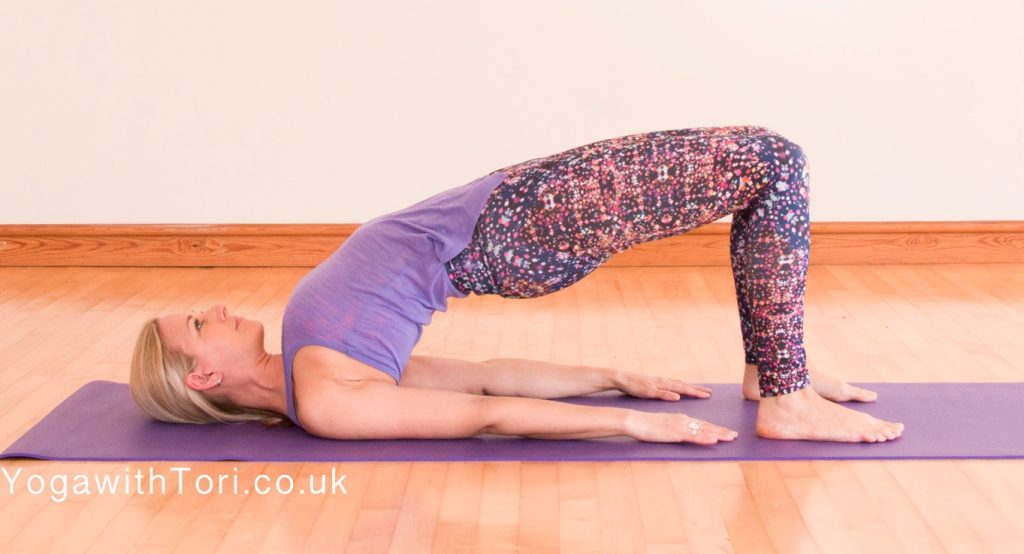
Example 1: bridge pose (dwi pada peetham), knee hug (apanasana) and rock, and seated twists and side bends (parivritta and parsva sukhasana), all moving with the breath.
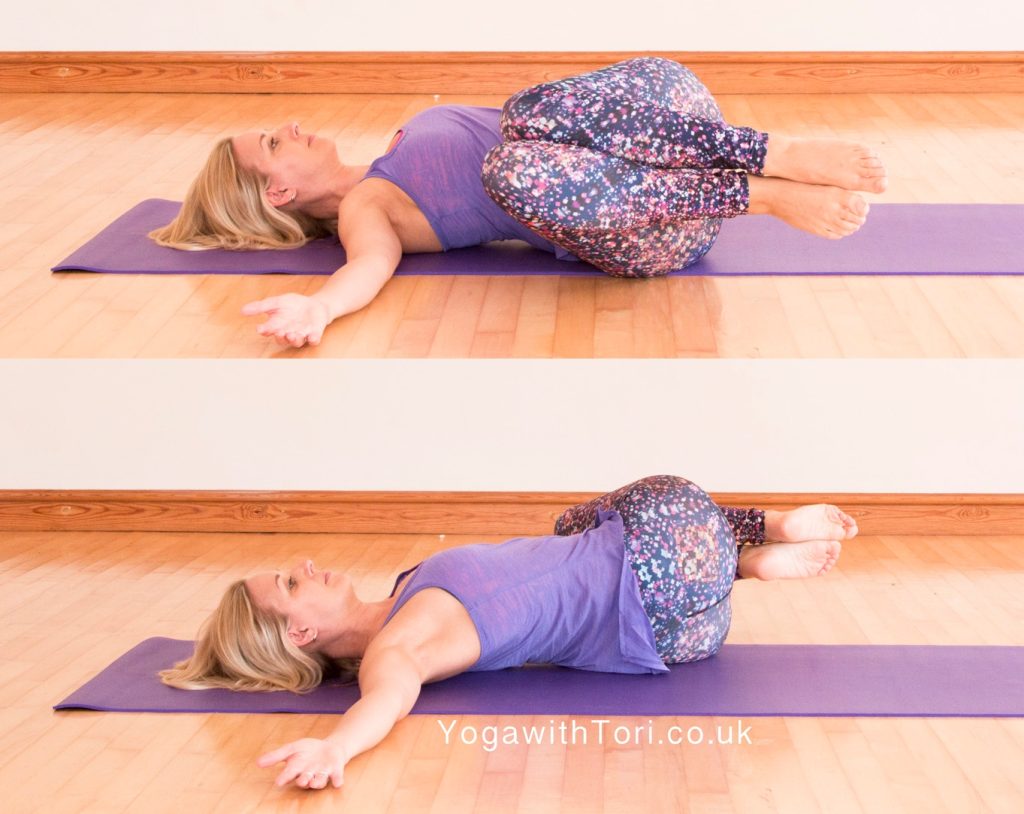
Example 2: reclining twists (jathara parivartanasana), cat (marjariasana/ biliasana), gate pose (parighasana), all moving with the breath.
Or
Practice a few rounds of a set sequence like salute to the sun (surya namaskar) – or salute to the moon (chandra namaskar) or salute to the Earth (prithvi namaskar), if you are familiar with them.
GRADUALLY EXPAND THE PRACTICE
Once you’ve got a regular habit established, add a few more postures in.
Take three postures from a recent class you attended and work them in. Try not to make them all hard or challenging postures – aim for one easy, one neutral and one challenging posture. Work on those three poses for a week. Any improvements over the week can help encourage you further. Keep a ‘yoga notebook’, and jot down the three poses that you’re working on each week. It’s great to keep track of progress and to build up a repertoire of poses that are useful for you.
BUILDING A FULLER, MORE ROUNDED PRACTICE
Add the following elements to create a more complete practice.
Core strengthening – your core includes your whole torso, not just your front abdominals. Include strengthening for the back of your body – think postures like snake (sarpangasana) and locust (shalabasana), as well as the sides, side plank (vasisthasana), and all-around strength, plank (phalakasana).
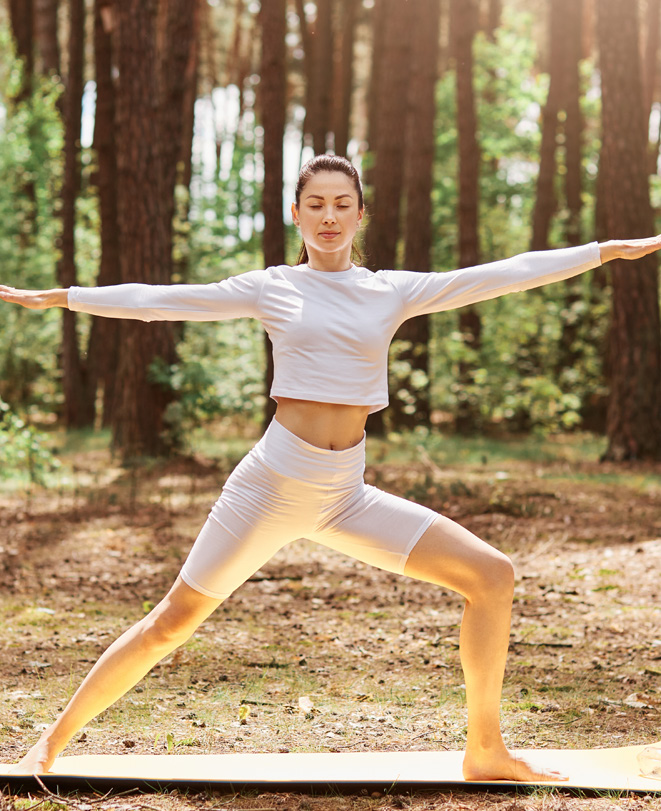
Standing postures such as warrior 1, 2, 3 (virabhadrasana variations), triangle pose (trikonasana).
Balance work like tree pose (vrksasana), half moon (ardha chandrasana), dancer variations (natarajasana).
PLANNING A COMPLETE PRACTICE
Warm-up poses: think of the parts of the body that you need to prepare for the more challenging postures. Kramas (step-by-step progression or sequence) prepare any areas that need more warming up/mobilising before coming into stronger postures. For example, use gentler movements to mobilise the spine, or gentler backbends, before attempting deeper backbends like dancer or wheel.
“Remember, yoga is not about achieving or perfecting poses – it’s about how the practice supports us in everyday life, helping us navigate the world with greater ease and awareness.”
Hip and leg stretches that cover all areas:
- Front of hips and thighs (hip flexors and quadriceps): low lunge (anjaneyasana), warrior 1 (virabhadrasana 1), reclining hero (supta virasana).
- Back of legs (hamstrings and calves): intense standing forward bend/ pyramid (parsvottanasana), seated forward bend (paschimottanasana), hand to foot pose (pada hastasana).
- Inner thighs (adductors): side lunges (skandasana), cobbler pose (baddha konasana)
- Outer hips and thighs (abductors): eagle (garudasana), half lord of the fishes (ardha matsyendrasana), reclining twist (jathara parivartanasana), cow faced pose (gomukhasana)
Shoulder focus such as puppy pose (uttana shishosana) or dolphin (ardha pincha mayurasana).
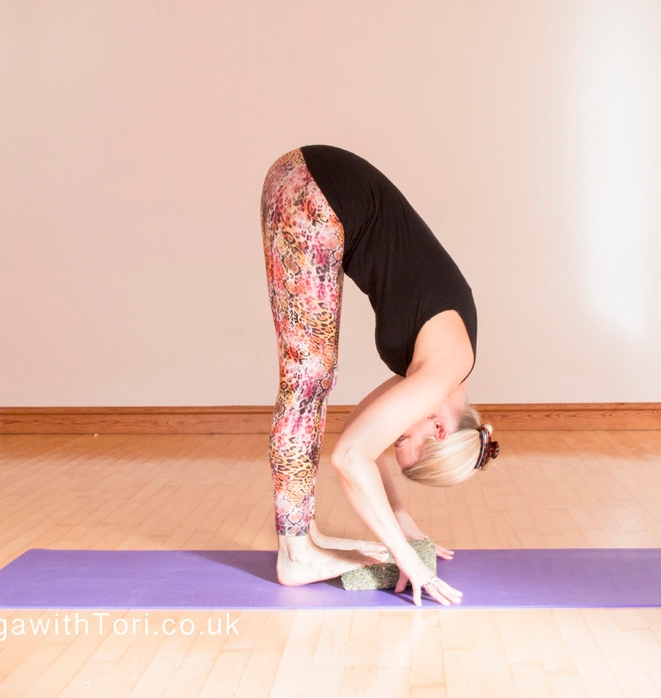
Counter-poses: After peak/challenge postures, do the simplest, easiest opposite movement to release tension. For example, if your posture was a big backbend like dancer, then follow with a gentle standing forward bend.
Wind-down: If your practice has been energetic, include some gentler floor-based practice towards the end. Seated forward bends (like straight-legged seated forward bend / paschimottanasana, head to the knee pose / janu sirsasana), reclining twists (jathara parivartanasana variations) and gentle hip openers (like reclining cobbler/ supta baddha konasana or happy baby pose / ananda balasana) help ground the body and quieten the mind before relaxation.
Balance strength and flexibility: Try to include both strengthening and stretching postures. You can focus more on one to keep your practice shorter but aim for both over a week or a month.
You can make the same practice stronger or easier by varying how dynamic you make it, and how long you hold the postures for. Listen to what your body needs on any given day and adapt your practice to suit your needs.
Remember, many postures work multiple areas – eagle pose counts as a standing posture, a balance, a stretch for the outer hips and thighs, and shoulder mobility all in one.
WATCH OUT FOR THESE COMMON PITFALLS
Perfectionism: Thinking that if it’s not ‘perfect’, it doesn’t count. It all counts, even if your practice is just lying in a restorative posture for 10 minutes.
Building positive habits takes time: It won’t necessarily happen immediately. You may need to go back a stage or two before it finally ‘sticks’. That’s completely normal – keep going. If you miss a day, try to pick up again as soon as possible.
Comparing yourself to others: It doesn’t matter what you look like compared to others. What matters is showing up for yourself and practising with your body as it is right now.
Household distractions: It’s amazing what we notice from the mat – the cobwebs on the lampshade, the dog toys under the sofa, the things that need doing. Let them wait. This is your time.
Interruptions: Put your phone away unless you’re using it for timing or music. Don’t forget you can always put it on ‘Do Not Disturb’. Interruptions will happen but get back to your practice as quickly as you can.
Remember – it’s your body and your practice. Listen to what you need each day and enjoy what your practice gives you.
Still not sure ?
Book a session with an experienced teacher to create a personal plan or review what you’ve developed. They’ll add insights and variations you hadn’t thought of and can check that your practice is well-balanced.
Where Next?
As you get more experienced, you can explore practices that work with your energy levels. The Prana Vayus are the five directional flows or winds (vayu) of energy (prana) in the body. Certain poses have more of an effect on each vayu and affect how we feel at an energetic level.
For example, forward bends tend to encourage more downward-moving energy (apana), which is calming and grounding – ideal for quietening a busy mind or for an evening practice. In contrast, backbends stimulate more upward-moving energy (udana), which can feel uplifting and invigorating – great for a morning session.
You might also want to focus on particular areas of your body that need attention, explore practices that suit your individual constitution (your dosha in ayurveda, yoga’s sister science), work on balancing your chakras (the energy centres in your body) or build towards a particularly challenging pose that inspires you.
Remember, yoga is not about achieving or perfecting poses – it’s about how the practice supports us in everyday life, helping us navigate the world with greater ease and awareness. May your yoga continue to be a source of strength, comfort, steadiness and vitality for many years to come.
QUICK CHECKLIST FOR A COMPLETE PRACTICE
- Basic spinal movements (backbend, forward-bend, twist, side-bend)
- Core strengthening postures x 2
- Salute to the sun, moon or earth
- Standing poses x3
- A second twist and side stretch • Hip and leg stretches (all four sides)
- Shoulder work
- A challenge (arm balance, inversion, or working towards one) • A restorative pose
- A breathing practice such as alternate nostril breathing, humming bee breath or victorious breath
- Final relaxation – don’t skip this!
Tori Lang is a British Wheel of Yoga Foundation Course and Teacher Training Diploma Course Tutor, as well as being BWY Wales Training Officer. She has been practicing yoga for over 30 years and teaching for 20. Her teaching is described as inclusive and inspiring.
Find out more about her upcoming Teacher Training Diploma course starting this autumn at: https://portal. bwy.org.uk/user/trainings/382 E: info@yogawithtori, W: yogawithtori.co.uk
Photos: Holly Heathcote https://www. instagram.com/holyheathcote/ and Jon Butters https://www.instagram.com/ jonbutters/


Leave feedback about this