


DISCOVERING OUR ‘INNER FELT SENSE
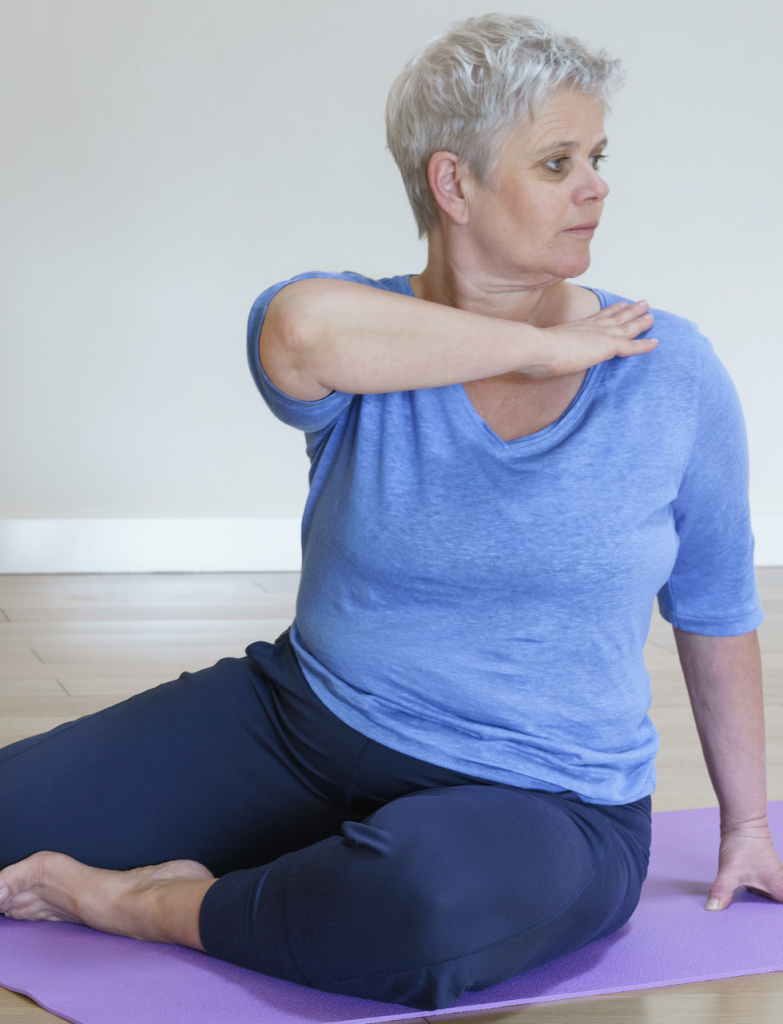
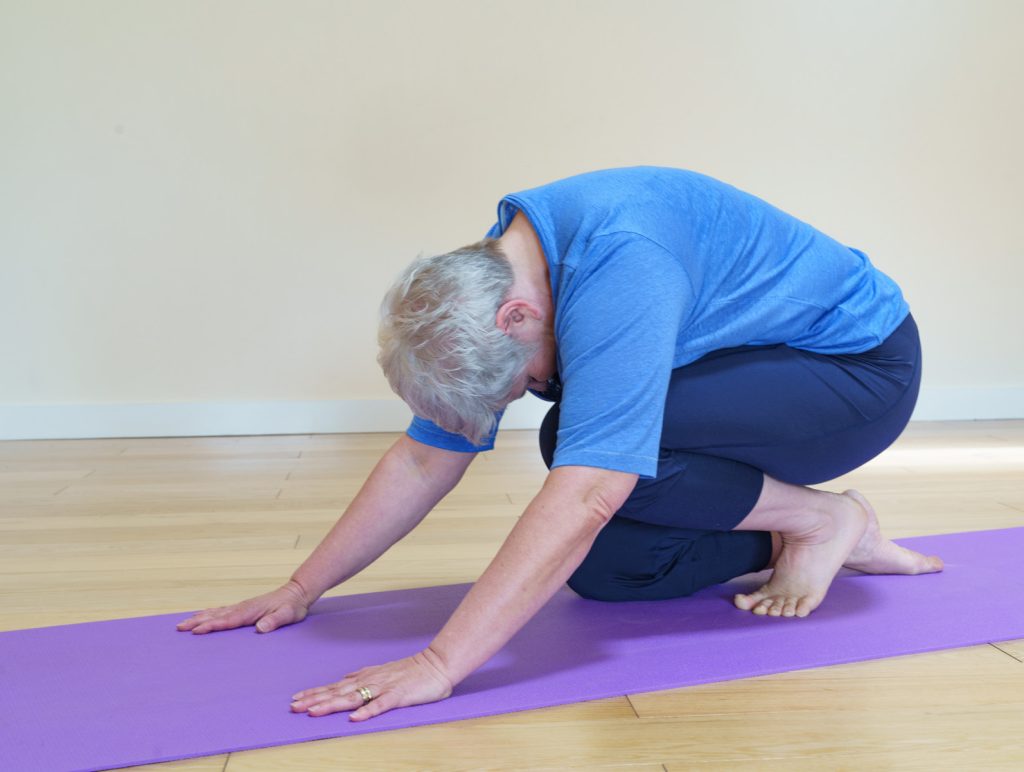
There’s an increasing interest in the practice of somatics, with more people seeking simple practices that ease tension, improve mobility and support nervous system health. It is now being incorporated into yoga teacher training programmes and in yoga studios.
A deep mind-body system that supports the practice of ‘mindful yoga’, somatics can bring about significant change to the functioning of the body and is utterly transformative. Through it, we can develop a deep ‘inner felt sense’ that changes the way we move our body in all that we do, including our yoga practice.
So, What is Somatics?
Somatics is a practice where we learn to reprogramme our muscles through gentle, guided movement. It helps us notice where tension has built up in the body and shows us how to release it. Our bodies often react unconsciously to habitual movement, daily stresses or repetitive use, which can leave the muscles tight, painful or stuck in a certain holding pattern, particularly following injury or illness.
Somatics works by using the brain to retrain the body, enabling us to restore ease of movement that may have been lost. The effects are often
faster and longer lasting, while also rebalancing the musculoskeletal system and deepening our ability to sense and understand the body from within.
Habits or Samskaras
Many of us who practice yoga āsana (postures) regularly develop habitual ways of moving and sometimes these habits can create problems of their own. Every movement modality can become routine, and we often repeat the same movement patterns or ‘grooves’ time and time again. When we know āsana or a sequence well, we can perform it on autopilot, with very little attention or mindfulness. If, within our yoga practice, we have created unhelpful movement patterns, we risk repeating them until tightness, pain or injury signals that something is wrong. A somatic approach to āsana can be highly revealing, helping us discover and map more beneficial ways of moving.
Developing Internal
Awareness
The internal awareness or interoception – the ability to sense and feel what is happening inside the body – discovered through Somatics can transform the way we practice yoga, making postures easier, more graceful and less effortful. Yet, interoception can be elusive. I have practiced yoga for over 30 years, taught for over 20, and worked with many renowned yoga teachers, but I never truly felt that ‘real’ internal awareness until I started practising Somatics.
Once I had that awareness, I could bring it into every yoga posture and prānāyāma practice, and my yoga became the internal practice I had long sought. With Somatics, I developed an intelligent relationship with sensation and discovered a profound sense of space and ease in my body.
A Focused Mind
The Yoga Sūtra of Patañjali tells us that the purpose of yoga is to contain the movements of the mind’ (YS 1:2 – yogah – cittavrttinirodhah), that yoga can be viewed as a combination of disciplined practice, self-inquiry and trust’ (YS 2:1 – tapah – svādhyāya – iśvarapranidhānāni – kriyāyogah), and explains that the act of concentrating the mind comes from binding or fixing the mind to an object or focus (YS 3:1 – deśa bandhah cittasya dhāranā). Similarly, the practice of Somatics requires us to be fully present, to engage consciously with each movement and cultivate self-awareness
Similarly, the practice of Somatics requires us to be fully present, to engage consciously with each movement and cultivate self-awareness
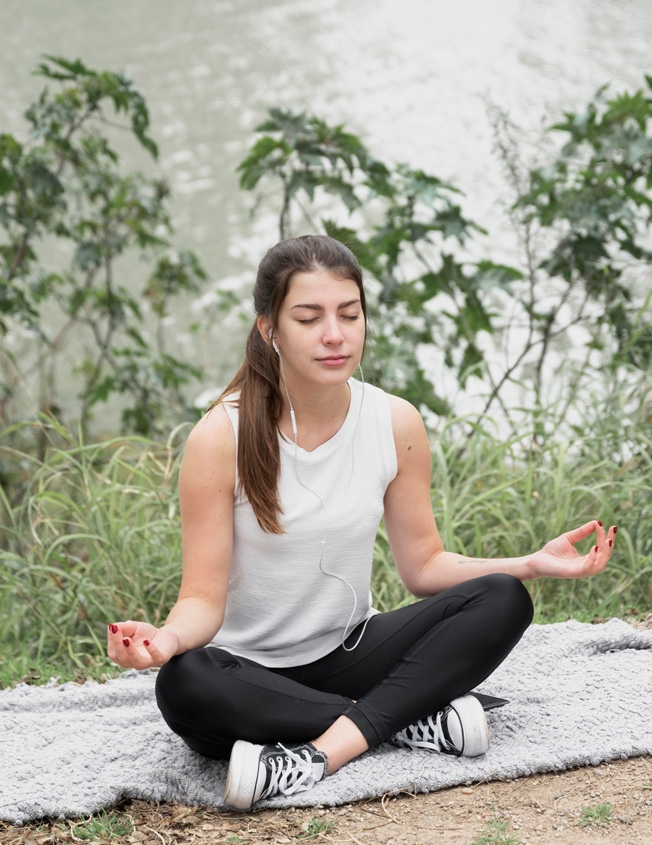
and trust in the process. This awareness naturally leads to a quieter, more focussed mind, a quieter mind – a state we might describe as a ‘state of yoga’. The slow, deliberate movements used in Somatics anchor our attention to the sensations of the body, allowing us to feel ourselves fully in each moment. It is this ‘special attention’, engaging both body and brain, that makes Somatics such an effective practice.
Three Simple Practices
These simple movements are ideal for relieving stiffness, pain and postural imbalances.
I encourage you to explore them with a curious mindset, moving slowly to fully enjoy the benefits of release without overexertion. It is important to scan your body from head to toe, noting any sensations and differences that you feel after performing the movement. Between repetitions, completely release muscle effort and return to your natural resting state.
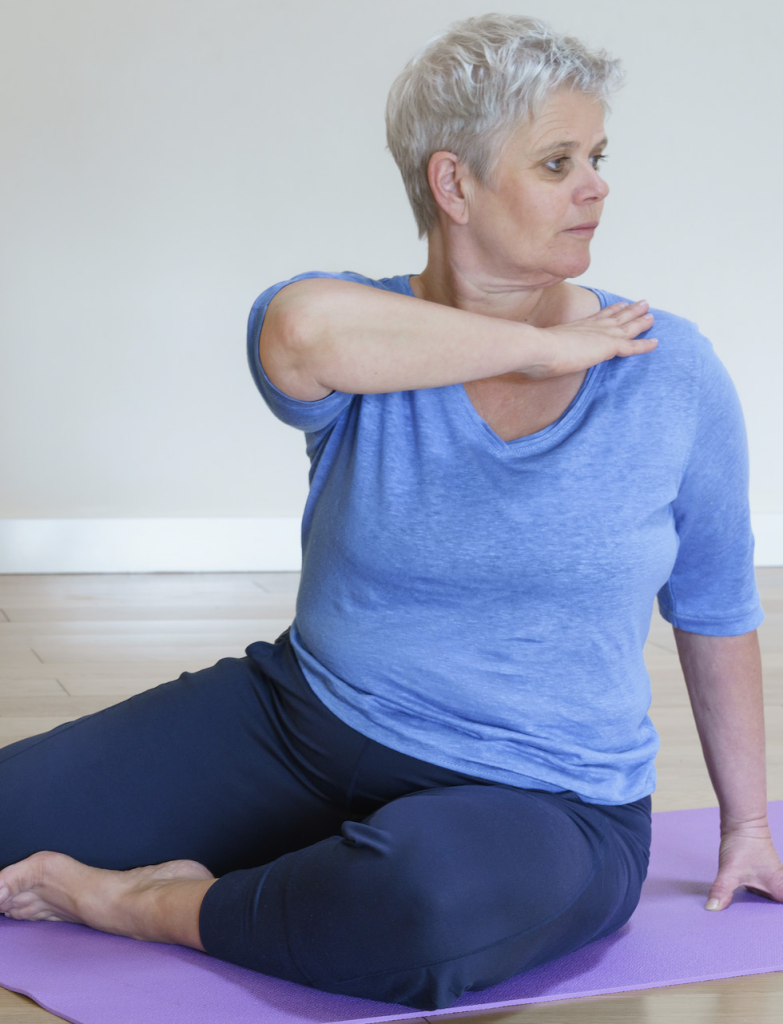
1. ARCH AND FLATTEN
This movement helps release tension in the back while creating gentle movement throughout the spine.
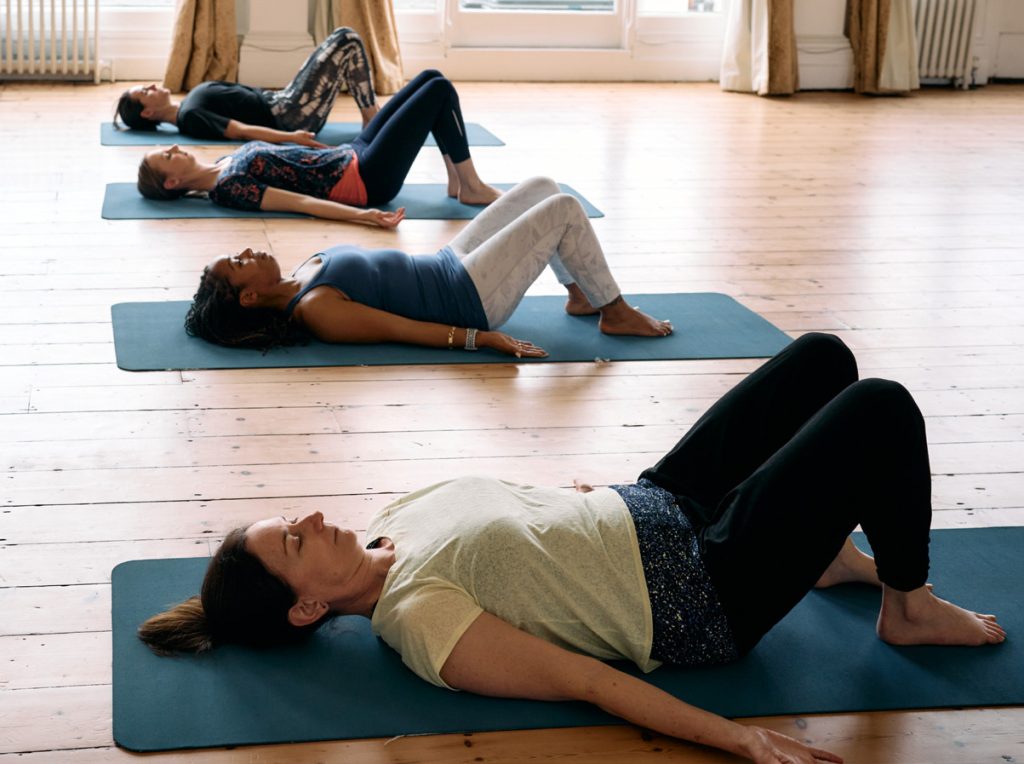
- Lie on your back with your knees bent.
- Explore your foot placement. Too close to your sitting bones or too far away will change the pelvis position and affect your lower back. Find a comfortable “neutral” position where your lower back feels relaxed.
- Notice the curve of your lower back and how your ribs touch the floor. Imagine the imprint you would make if lying on sand.
- Inhale and gently arch your lower back, tilting the pelvis towards the tailbone. Notice how the muscles contract. Exhale and roll the pelvis back, letting the lower back rest on the floor as the muscles lengthen and relax.
- Allow your head to move slightly with the spine, feeling the motion flow through your back.
- Move slowly and mindfully, noticing which muscles are contracting and which are lengthening. Never force the movement.
- Aim for a smooth, wave-like movement through the spine.
- Begin to notice other areas that move — shoulders, hips, knees, ankles.
- Repeat a few times, then rest and observe any changes in your back.
2. Hip Hikes
This movement helps balance the lower back and pelvic area.
- Lie on your back with your knees bent. Set this up as you did for Arch and Flatten.
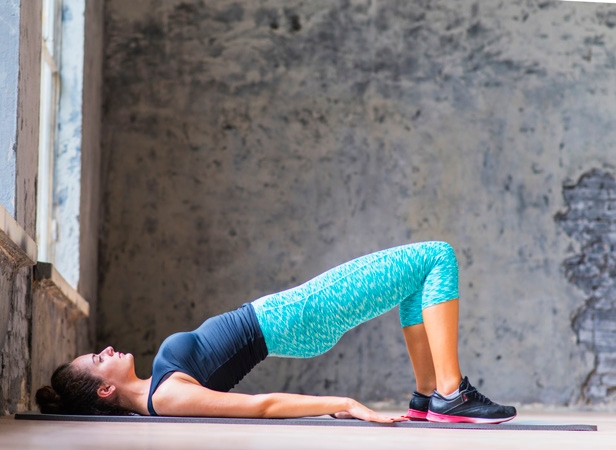
- Gently hitch your left hip up towards your left armpit, tightening the waist muscles, then slowly release.
- Repeat this a few times and notice that when you shorten the muscles on your left side, the right side lengthens. Keep your pelvis level on the floor and focus on the movement in the side waist. You can imagine that you are turning a steering wheel. Avoid arching your back.
- Pause in neutral and notice how your back feels. Do the left and right sides feel different?
- Repeat on the right side, then alternate between the two as if wagging a tail.
- When finished, relax and notice any changes in your back
3 Single Knee Drops
This movement lengthens tight inner thigh, hip and groin muscles and can really help with hip mobility and range of movement.
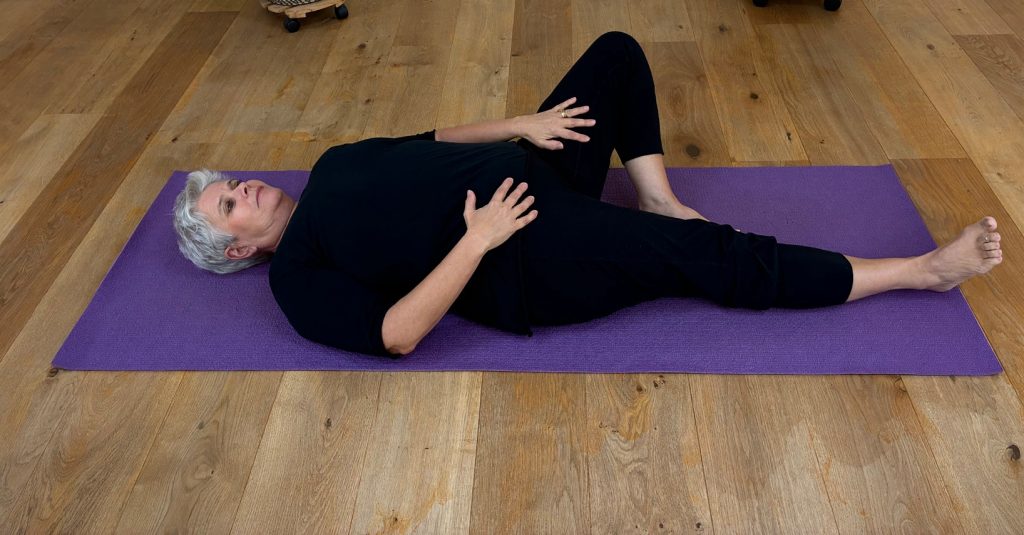
- Lie on your back with your left leg extended and your right knee bent.
- Place your right hand on your inner thigh.
- Very slowly, on an exhale, allow your right knee to fall out towards the floor. As you move the leg, visualise the muscles lengthening to lower the knee out to the side.
- Let the leg fully relax in this position. On an inhale, slowly bring the knee back to the starting position. Visualise how the muscles need to contract and tighten to draw the knee back to centre.
- Repeat this five times, seeing if you can feel the muscles lengthening and contracting under your hand. Take care to keep your pelvis throughout. You can place your other hand on the front of your pelvis to monitor this.
- After the fifth repetition, relax the leg fully before extending it.
- Rest and notice how the leg feels (Longer? More turned out? Compare how the right and left leg feel) before repeating on the other side
Find out more about Somatics
Debby is running a 4-day course in January 2026 in Devizes, Wiltshire, exploring the symbiotic relationship between somatics and yoga. The course will equip yoga practitioners with the skills and understanding to integrate a variety of Somatics practices into their classes or personal practice mindfully and purposefully. Participants will learn to design sessions that not only promote greater ease and fluidity in the body, but also calm the mind and emotions, supporting a deep sense of peace.
To find out more visit: https://portal.bwy.org.uk/user/trainings/469
Debby Wilkinson is a senior Yoga Teacher and Somatics educator who has been teaching Yoga in Devizes and the surrounding area for over 20 years. During this time, she has been a course tutor for the British Wheel of Yoga’s foundation course and teacher training diploma, as well as being the owner/ director of the White Horse Yoga Centre in Devizes.
Debby works extensively in the field of Somatics and its relationship to Yoga, presenting at Yoga conventions and continually exploring the mind/ body complex as a way of managing the stresses in life that can have such an adverse effect on every aspect of our being.
Website: https://whitehorseyoga.co.uk/
Words: Debby Wilkinson, BWY Short Course Tutor


Leave feedback about this